A Beginner’s Guide to Buying Cycle Accessories
Buying a new bicycle is exciting, but choosing the right accessories can be just as important. Cycle accessories can improve your safety, comfort, convenience, and overall riding experience.
However, beginners often face one common problem: There are so many accessories available that it can be difficult to know what to buy first.
This guide will help you understand the essential cycle accessories and how to choose the right ones for your needs.
1. Start by Understanding Your Riding Needs 🚴
Before buying any accessory, think about how and where you will use your bicycle.
Ask yourself:
- Do I ride to work or college?
- Do I ride for fitness?
- Do I enjoy long-distance cycling?
- Do I ride mostly during the day or at night?
- Do I ride on city roads, trails, or both?
Your riding style will help you decide which accessories are most important.
For example, a daily commuter may need lights, a lock, and a bag, while a long-distance rider may prioritize a water bottle holder, repair kit, and portable pump.
2. Prioritize Safety Accessories 🪖
Safety accessories should be at the top of every beginner’s shopping list.
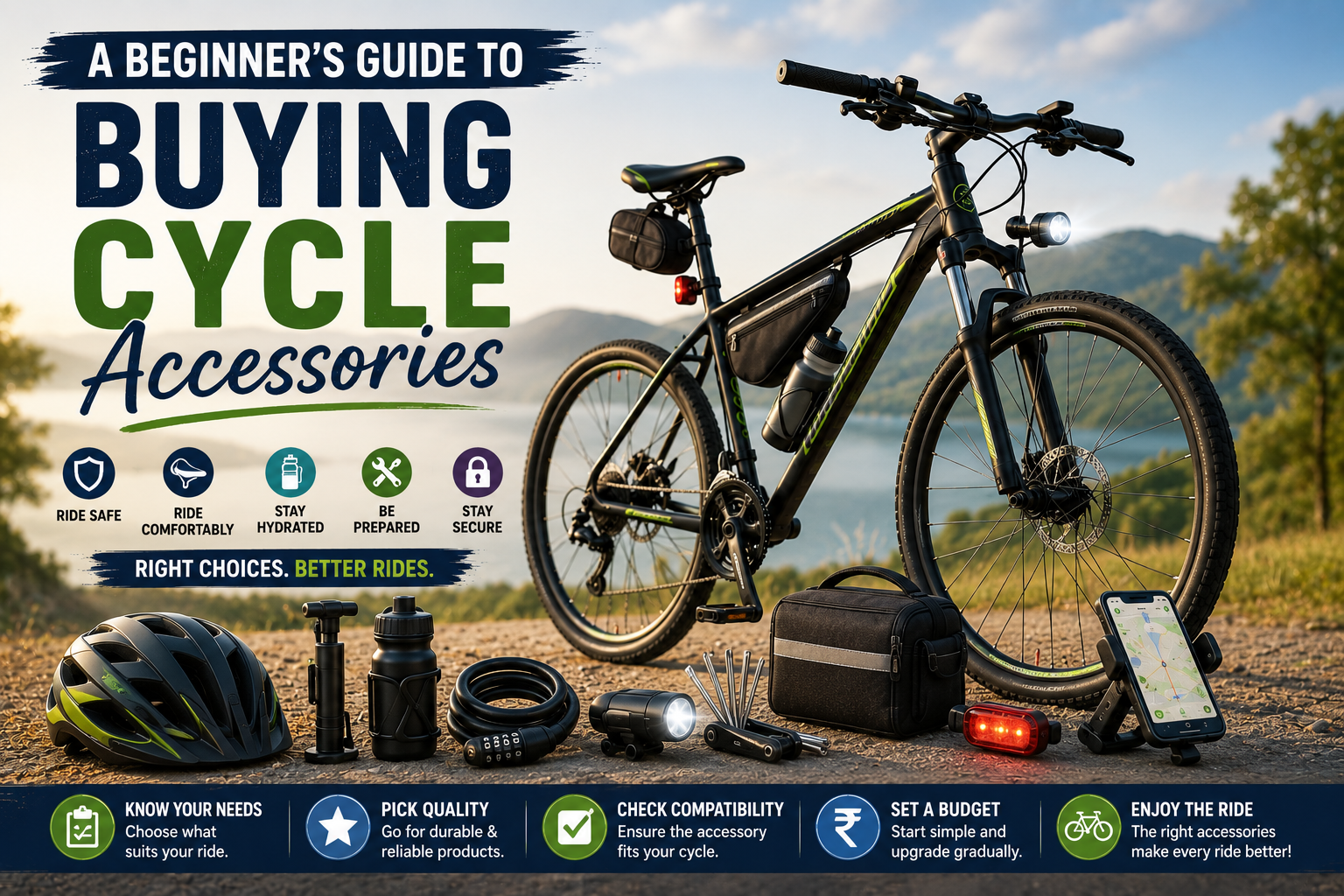
Essential safety accessories include:
- Helmet
- Front light
- Rear light
- Reflectors
- Bell or horn
A properly fitting helmet is one of the most important accessories for protecting yourself while riding. Lights and reflectors can improve your visibility, especially in low-light conditions.
Tip: Choose safety products that fit properly and are suitable for your type of cycling.
3. Choose the Right Cycle Lock 🔒
If you plan to park your bicycle outside, a good lock is essential.
When choosing a cycle lock, consider:
- Where you usually park
- How long you leave your cycle unattended
- The type of area
- The size and weight of the lock
A stronger lock may be heavier, while a lightweight lock can be easier to carry. Choose a balance between security and convenience.
4. Stay Hydrated with a Bottle and Holder 💧
A water bottle and bottle holder are simple but useful accessories, especially for fitness and long-distance riders.
Choose a bottle holder that fits securely on your bicycle frame. Make sure the bottle is easy to remove and does not interfere with your riding position.
For beginners, this is an affordable accessory that can make long rides much more comfortable.
5. Carry a Basic Repair Kit 🔧
Mechanical problems can happen during any ride. A basic repair kit can help you deal with common issues.
A beginner-friendly repair kit may include:
- Tyre levers
- Puncture repair patches
- A multi-tool
- A portable pump
- A spare tube
You do not need to become an expert mechanic. Learning a few basic skills, such as fixing a puncture or checking tyre pressure, can make you a more confident rider.
6. Consider a Phone Holder 📱
A phone holder can be useful if you use your smartphone for navigation or tracking your rides.
When buying one, look for:
- A secure grip
- Compatibility with your phone
- Easy installation
- A stable design
Make sure the holder does not block your view of the road or interfere with your handlebars.
7. Add Accessories for Comfort
Once you have covered the basic safety essentials, consider accessories that can improve comfort.
Popular options include:
- Comfortable handlebar grips
- Cycling gloves
- A suitable saddle
- A seat cover
The right comfort accessories can reduce fatigue and make longer rides more enjoyable.
Remember, comfort is personal. An accessory that works well for one rider may not be the best choice for another.
8. Choose a Bag or Carrier for Convenience 🎒
If you carry items while cycling, a cycle bag, basket, or carrier can be very useful.
You can choose from:
- Handlebar bags
- Frame bags
- Saddle bags
- Rear carriers
- Front baskets
Think about what you usually carry before choosing the size and type of bag.
For example, a small saddle bag may be enough for tools and a spare tube, while a daily commuter may need a larger bag for personal belongings.
9. Check Compatibility Before Buying
One of the most important things beginners should remember is that not every accessory fits every bicycle.
Before buying, check:
- Frame size and mounting points
- Handlebar diameter
- Seat post compatibility
- Available space on your bike
- Product dimensions
Checking compatibility before purchasing can help you avoid unnecessary returns and expenses.
10. Set a Budget and Buy Essentials First 💰
You do not need to buy every accessory at once.
Start with the most important items:
- Helmet
- Front and rear lights
- Cycle lock
- Water bottle and holder
- Basic repair kit and pump
After that, you can gradually add accessories such as a phone holder, gloves, bags, stylish grips, or other customization options.
Buying gradually helps you understand what you actually need.
Common Mistakes Beginners Should Avoid
When buying cycle accessories, try to avoid these common mistakes:
- Buying accessories only because they look stylish
- Ignoring compatibility with your bicycle
- Choosing the cheapest option without considering quality
- Buying too many accessories at once
- Forgetting about comfort and convenience
- Not learning how to use basic repair tools
The best accessories are the ones that match your bicycle, riding style, and personal needs.
Final Thoughts
Buying cycle accessories does not have to be complicated. Start by focusing on safety, visibility, security, hydration, and basic maintenance. Once you have the essentials, you can explore accessories that improve comfort, convenience, and style.
Remember, the goal is not to buy the most accessories—it is to choose the right accessories for your ride.
Start simple, ride safely, and upgrade your cycling experience one accessory at a time. 🚴♂️✨